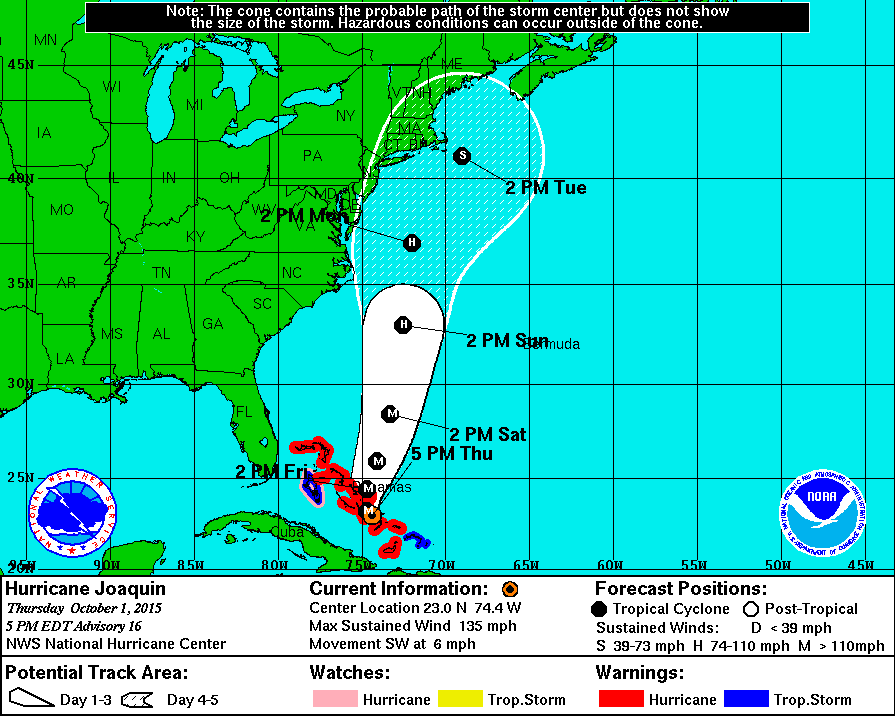
Hurricane Joaquin Track Forecast as of 5PM ET October 1 2015 (click to enlarge)
At 500 PM EDT (2100 UTC), the center of Hurricane Joaquin was
located near latitude 23.0 North, longitude 74.4 West. Joaquin is
moving toward the southwest near 6 mph (9 km/h), and a westward or
southwestward motion is expected through tonight. A turn toward the
north is expected on Friday, and a faster motion toward the north is
expected Friday night and Saturday. On the forecast track, the
center of Joaquin will move near or over portions of the central
Bahamas tonight and pass near or over portions of the northwestern
Bahamas on Friday.
Maximum sustained winds are near 130 mph (215 km/h) with higher
gusts. Joaquin is a category 4 hurricane on the
Saffir-Simpson
Hurricane Wind Scale. Some additional strengthening is possible
tonight and Friday, with some fluctuations in intensity possible
Friday night and Saturday.
Hurricane-force winds extend outward up to 45 miles (75 km) from the
center and tropical-storm-force winds extend outward up to 175 miles
(280 km).
The estimated minimum central pressure is 936 mb (27.64 inches).
HAZARDS AFFECTING LAND
WIND: Hurricane conditions are expected to continue across portions
of the central and southeastern Bahamas through Friday. Hurricane
conditions are expected over portions of the northwestern Bahamas
tonight and Friday. Tropical storm conditions will affect other
portions of the southeastern Bahamas, and the Turks and Caicos
Islands through tonight.
STORM SURGE: A very dangerous and life-threatening storm surge will
raise water levels by as much as 5 to 10 feet above normal tide
levels in the central Bahamas in areas of onshore flow. A storm
surge of 2 to 4 feet above normal tide levels is expected in the
remainder of the Bahamas within the hurricane warning area. Near
the coast, the surge will be accompanied by large and dangerous
waves.
RAINFALL: Joaquin is expected to produce total rain accumulations
of 10 to 15 inches over the central Bahamas with isolated maximum
amounts of 20 inches. Rainfall amounts of 5 to 10 inches are
expected over the southeastern Bahamas, with 2 to 4 inches over the
northwestern Bahamas. This rainfall could result in life-threatening
flash floods. Outer rain bands of Joaquin may affect portions of
eastern Cuba, Haiti, and the Dominican Republic today and tonight.
SURF: Swells generated by Joaquin will affect portions of the
Bahamas during the next few days, and will begin to affect portions
of the southeastern coast of the United States tonight and spread
northward through the weekend. These swells are likely to cause
life-threatening surf and rip current conditions. Regardless of
Joaquin’s track, a prolonged period of elevated water levels and
large waves will affect the mid-Atlantic region, causing significant
beach and dune erosion with moderate coastal flooding likely. Please
consult products from your local weather office.
Related Information: