
Criteria for a flood warning and flash flood warning
The National Weather Service (NWS) is the official U.S. government agency charged with issuing weather watches, warnings, and advisories and is the source used by iAlert.com. Below is the criteria for a flooding used by NWS forecasters when issuing flood warnings across the country….
FLOOD WARNING: A Flood Warning is issued when inundation of a normally dry area near a stream or other watercourse is expected, OR unusually severe ponding of water expected. Flooding of rivers or streams doesn’t always required rain to be overhead for your area to flood. Heavy rain upstream will make its way downstream causing flooding.
FLASH FLOOD WARNING: A Flash Flood Warning will be issued after few hours of locally heavy rainfall, a dam or levee failure, or water released from an ice jam rapidly flooding nearby land. Although flash flooding typically occurs in hilly or mountainous areas flash flooding can happen anywhere
Looking for the criteria for a tornado warning, criteria of a severe thunderstorm warning, or weather glossary?
This entry was posted in Weather Glossary and tagged flash flood warning, flood warnings, flooding, glossary, heavy rain, rainfall, watches warnings, weather glossary. Bookmark the permalink.
Read More
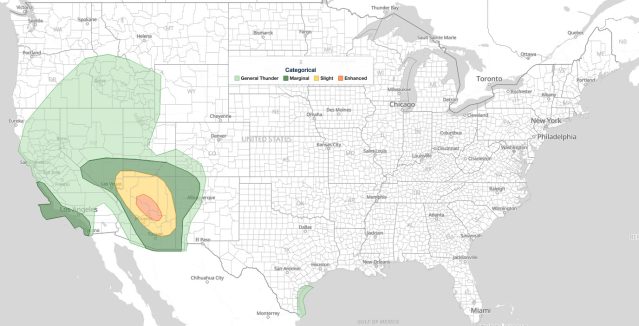
Arizona Severe Thunderstorms: SPC Enhanced Risk for Flagstaff and Prescott on October 21, 2026
Arizona severe thunderstorms are the headline threat in the NOAA Storm Prediction Center's updated Day 1 Convective Outlook for Wednesday, October 21, 2026, issued 12:30 UTC (5:30 am MST / 8:30 am EDT). The outlook places…
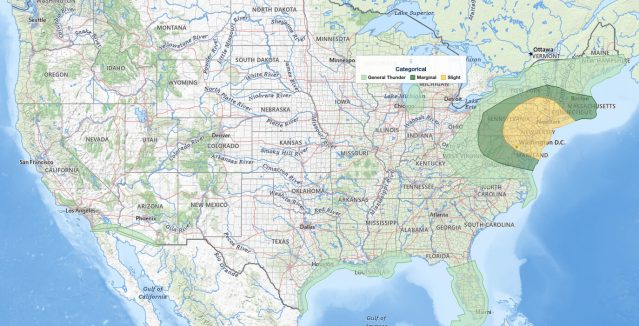
Mid-Atlantic Severe Thunderstorms: SPC Slight Risk for Damaging Wind and Tornado Risk on October 16, 2026
Mid-Atlantic severe thunderstorms are the focus of the NOAA Storm Prediction Center's updated Day 1 Convective Outlook, issued 12:42 UTC (8:42 am EDT) on October 16, 2026. It keeps a Slight Risk, level 2 of 5…
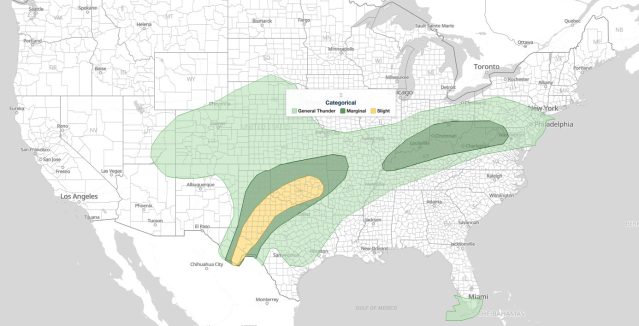
Southern Plains Severe Storms: SPC Slight Risk for Oklahoma and West Texas on October 14, 2026
Southern Plains severe storms are the main severe weather concern across the country on Wednesday, October 14, 2026, with the NOAA Storm Prediction Center placing Oklahoma City, Lawton and Ardmore in Oklahoma, along with Midland, Odessa…