Summer is the peak season for one of the nation’s deadliest weather phenomena, lightning. Here are some lightning facts and reminders on lightning safety.
There is no safe place outside in a thunderstorm. If you hear thunder, consider yourself within striking distance of the storm and remember, When Thunder Roars, Go Indoors. Once inside remain there until 30 minutes after the last thunder is heard. This is known as the 30/30 Lightning Rule.
While waiting out the storm indoors, consider these additional safety measures…
Avoid using the telephone
Avoid taking a shower, washing your hands, doing dishes. Close lightning strikes can conduct through your pluming
Avoid contact with conductive surfaces such as metal doors and window frames
If you cannot take shelter indoors there are steps you can do to lessen your risk of being struck by lightning…
Find safe shelter: Large enclosed structures are safer than smaller, or open, structures
Shelter in a car: Generally, enclosed metal vehicles, with the windows rolled up, provide shelter from lightning. Do not touch medal frame, best to sit with hands in your lap
Stay away from tall, isolated trees or other tall objects. If you are in a forest, stay near a lower stand of trees
At last resort, crouch down on the balls of your feet, head down, arms wrapped around your knees with hands over your ears. If caught outside in a thunderstorm and you feel the hair on your head or arms standup you are seconds away from being struck by lightning
Thankfully deaths caused by lightning strikes have lessened steadily for the last 10 years. According to NOAA’s National Weather Service the number of U.S. reported lightning deaths in 2011 was 53, down from 73 in 2001. Also, ninety percent of lightning victims survive, especially with timely medical treatment. If you find yourself in a situation needing to help a lightning strike victim some points to consider…..
Those struck by lightning do not carry a charge and it is safe provide medical treatment
Call 911 and start mouth-to-mouth resuscitation if required
If the victim has no pulse, begin cardiac compressions
In cold, wet situations put a protective layer between the victim and the ground to lower the risk of hypothermia
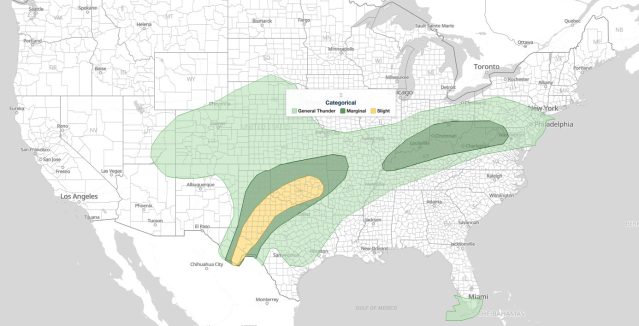
Southern Plains severe storms are the main severe weather concern across the country on Wednesday, October 14, 2026, with the NOAA Storm Prediction Center placing Oklahoma City, Lawton and Ardmore in Oklahoma, along with Midland, Odessa…
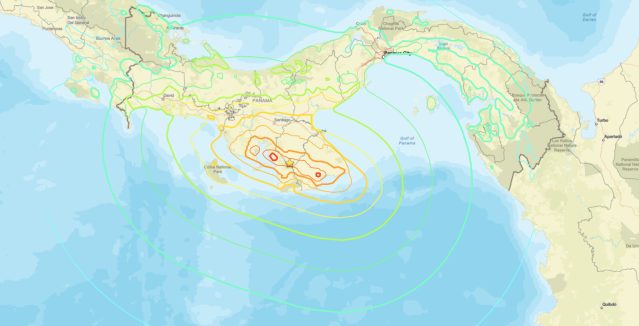
USGS ShakeMap of the M7.7 Panama earthquake. The star marks the epicenter; red and orange contours show the strongest estimated shaking. Source: U.S. Geological Survey. A powerful Panama earthquake struck the Azuero Peninsula on Friday, October…
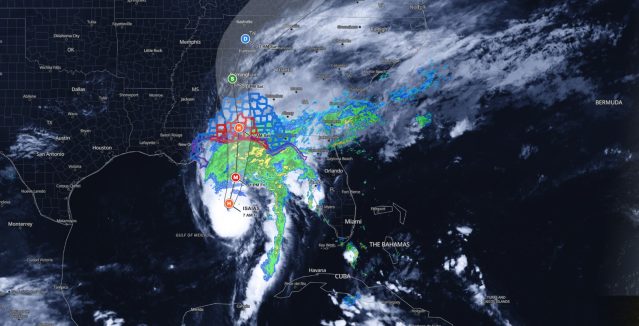
Hurricane Isaias position at 7 AM CDT Friday, October 9, 2026, with the NHC forecast track and cone toward the northern Gulf Coast and active coastal and inland warnings. Map: iAlert.com Hurricane Isaias landfall is expected…

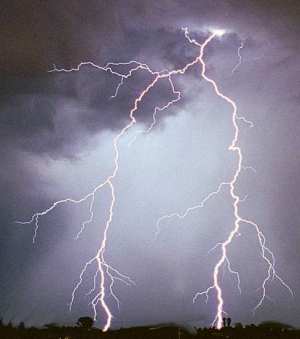 Summer is the peak season for one of the nation’s deadliest weather phenomena, lightning. Here are some lightning facts and reminders on lightning safety.
There is no safe place outside in a thunderstorm. If you hear thunder, consider yourself within striking distance of the storm and remember, When Thunder Roars, Go Indoors. Once inside remain there until 30 minutes after the last thunder is heard. This is known as the 30/30 Lightning Rule.
While waiting out the storm indoors, consider these additional safety measures…
Summer is the peak season for one of the nation’s deadliest weather phenomena, lightning. Here are some lightning facts and reminders on lightning safety.
There is no safe place outside in a thunderstorm. If you hear thunder, consider yourself within striking distance of the storm and remember, When Thunder Roars, Go Indoors. Once inside remain there until 30 minutes after the last thunder is heard. This is known as the 30/30 Lightning Rule.
While waiting out the storm indoors, consider these additional safety measures…